And yet, I am writing these words now during days when my loved ones in Iran are living with fear, anxiety, and the uncertainty of war.
That is what brought Arash back to my mind.
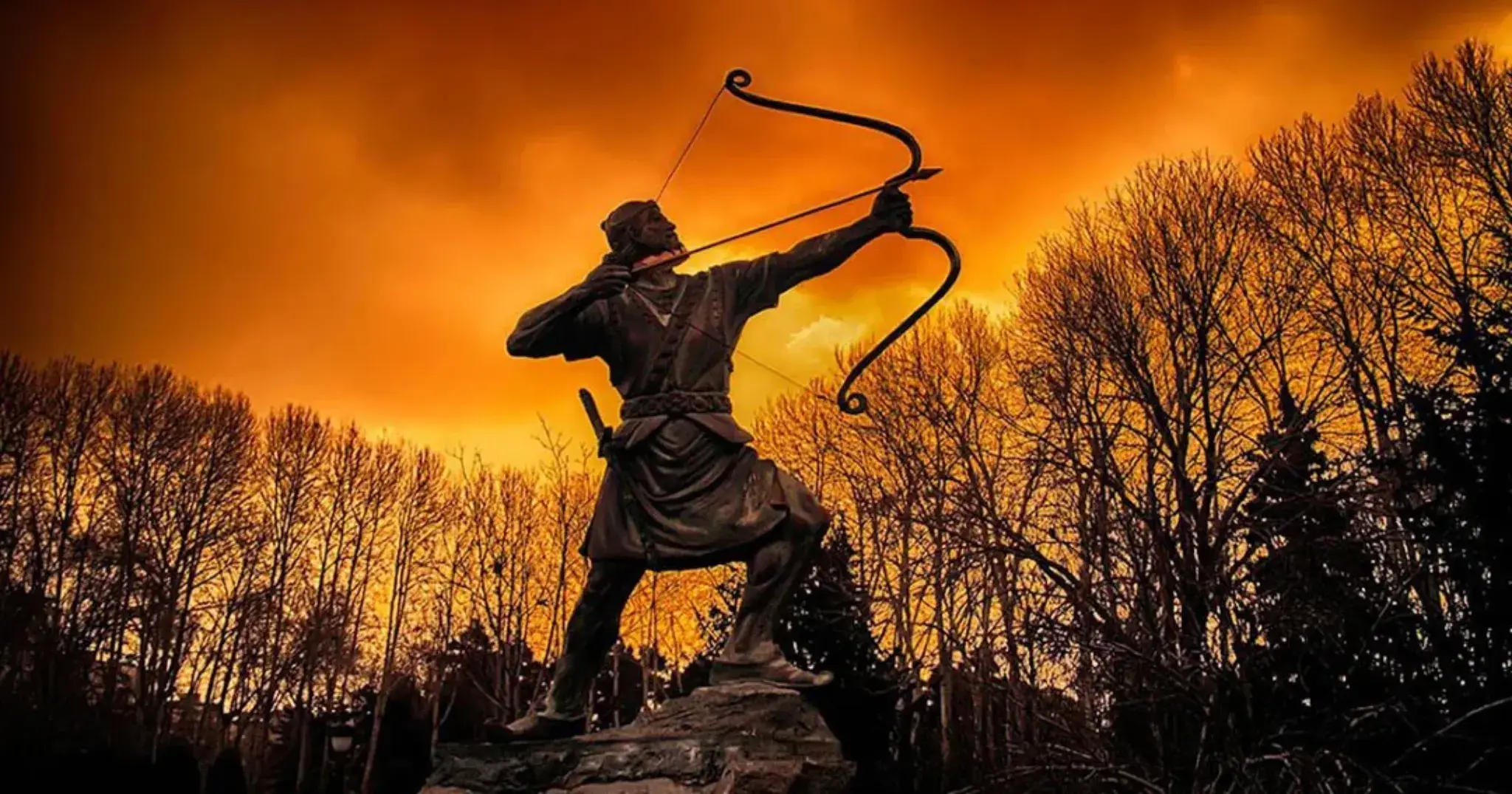
Arash the Archer — known in Persian as Arash Kamangir — is one of the most well-known figures in Persian mythology.
This story carries a sweet sense of nostalgia for me.
Back in high school, my friends and I performed a play based on the story of Arash, and perhaps that is why this story has always stayed with me.
At the time, it felt like just another school performance.
Years later, that memory returns in a completely different way.
Now, it turns into words.
Words that sometimes become a shelter when the weight of the world feels unbearable.
In ancient Persian narratives, a long war breaks out between Iran and Turan.
(Turan, in Persian mythology, usually refers to lands beyond the Oxus River — regions that today roughly correspond to parts of Central Asia.)
After years of bloodshed, both sides decide to make peace.
But one question remains:
They decide that an arrow will be shot from Mount Damavand, one of Iran’s highest mountains.
Wherever the arrow lands will become the border between the two nations.
People were terrified.
Among the Iranian army stood a man named Arash, known for his extraordinary skill in archery.
In the famous poem by Siavash Kasraei, Arash introduces himself like this:
a free man among soldiers.
With the only arrow left in my quiver,
I am ready
for your bitter trial.
On the promised day, Arash climbed the mountain.
He gathered every ounce of strength left in his body and released the arrow.
and flew…
and flew.
In Kasraei’s poem, horsemen following the arrow finally discovered where it landed:
half a day later,
they found it resting
on the trunk of a great walnut tree.
From that day on,
that place became the border
between Iran and Turan.
When people heard the news, they rushed toward the mountain in celebration, eager to embrace their hero.
But when they arrived, they found Arash lying lifeless on the ground.
He had poured every bit of his life force into that single arrow.
His shot had cost him his life.
Experiencing war in your homeland while living far away from the people you love is a strange feeling.
It is a constant mixture of anxiety, helplessness, and waiting.
And perhaps that is why some myths never truly grow old —
because every generation finds a new wound of its own reflected inside them.


Leave a Reply